
Glass Reinforced Plastic Boat Cleaning
GRP - how clean can we get it?
Well, the answer to this is 'it depends'. If you have a hard epoxy paint on top of a soft GRP (Glass Reinforced Plastic) surface or gel-coat, then we will struggle to clean it all off without causing serious and unnecessary damage to your boat. The other problem is of course that we can't necessarily tell what is underneath your paint until we have made a start - and even then it may vary across the boat as previous owners have patched, changed, cleaned, given up etc. as they have gone along!
As you will see from this collection of 'before and after' shots, we, and you, can't tell what we will find under the paint, which is why we do really like to have you or a representative around when we start cleaning paint off a boat!
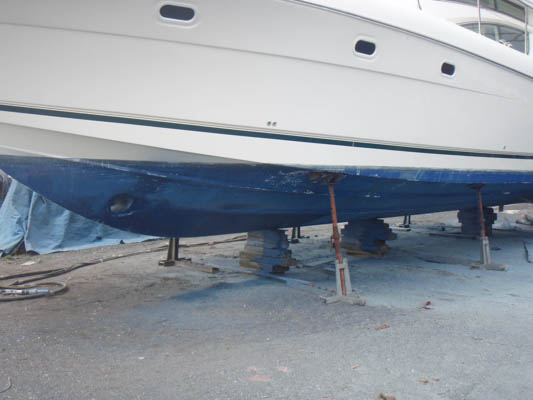
This is perhaps a typical boat and what we aim for... most of the paint off.. but just enough of the waterline left to make it possible to re-paint it in the same place!
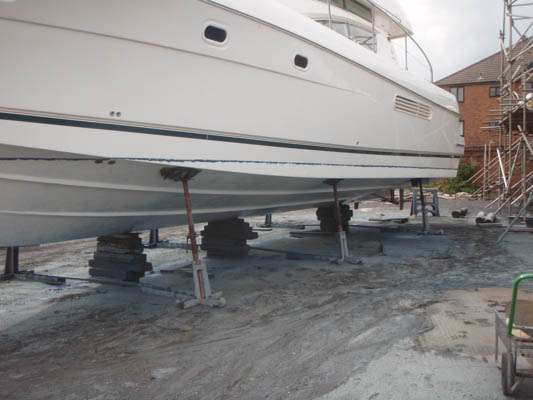
you'll also note that our abrasive, on an unsheeted boat, hasn't travelled far (and we clean it up).. in the top photo you will see that we have sheeted over next door's boat - which is always more effective. If a tarpaulin is hung over the side of a yacht, light is limited to our works, there are trip hazards, the sheeting tends to be pulled in by the blast and very often gets in the way, but worst of all the abrasive and air blast tends to be funnelled upwards between sheet and hull... typically spreading debris over a wider area and making a mess of the upper sides.
Hard Epoxies from Soft GRP
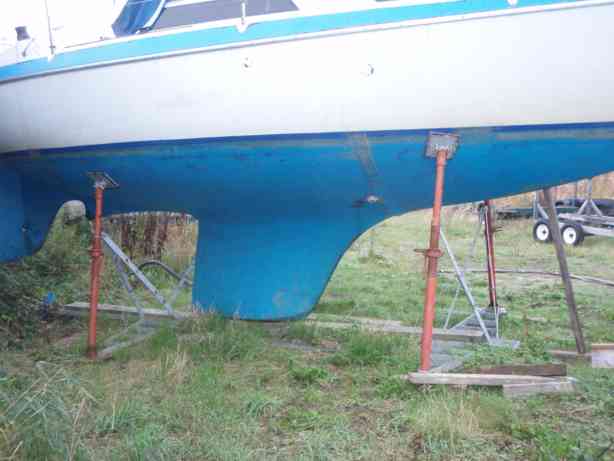
A Second boat - this one from 2010 - looks fine before we start - although the anti-foul definitely has a 'lumpy' appearance and all passers by have advised the owner to blast it off!
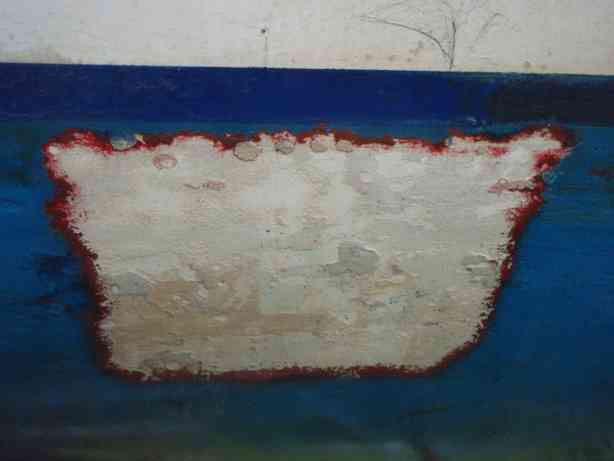
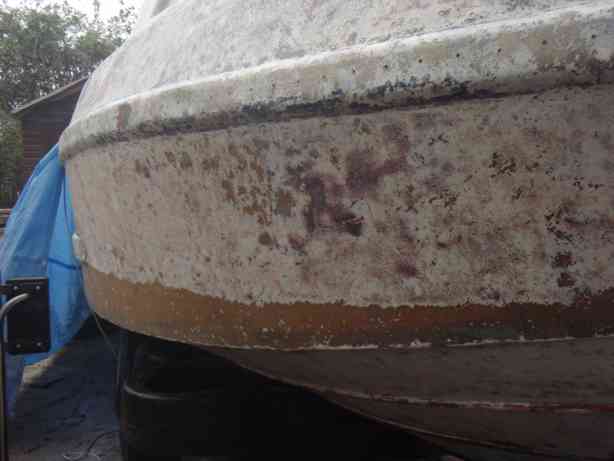
This next photo' is a close up of the first 'test panel' we did on the boat, and you can see the actual surface quality we managed to achieve - note that those lumps and bumps go under the blue and red paint - i.e. WE HAVEN'T CAUSED THIS PROBLEM - the problem was hidden by the paint job. I am convinced that the previous owner had had an epoxy gel-shield or the like roughly blasted off and that other blaster hadn't done a particularly good job, and they painted over the problem and sold the boat and the problem to someone else. Once you have these sorts of lumps you can't blast them off - the lump is harder that the surrounding surface and the surface goes, rather than the lump! The only solution to this is a belt sander or a complete gel-peel that will remove the high spots.
After Cleaning (and from a distance!) it doesn't look too bad! My man has made a fair attempt to remove all he can without damaging the surface!
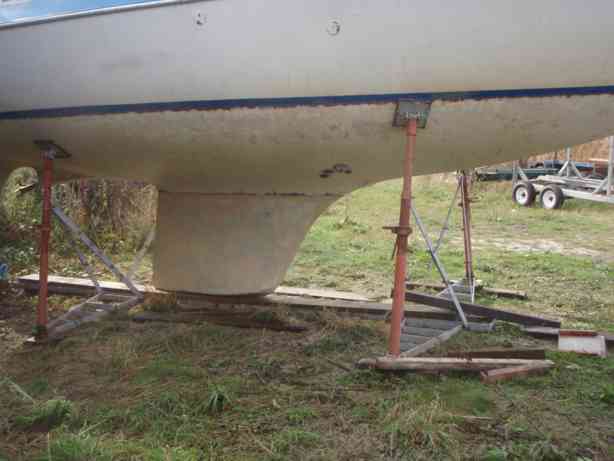
Gelshields
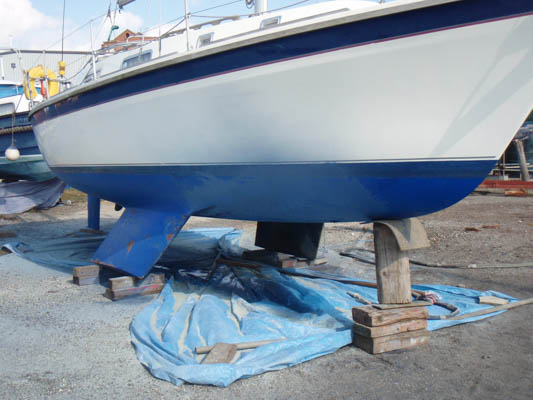
our delight - a bright contrasting colour that stands out when we do the cleaning - removing white paints from white gelshield is always the worst challenge (oh... multiple layers of white paint are worse!)
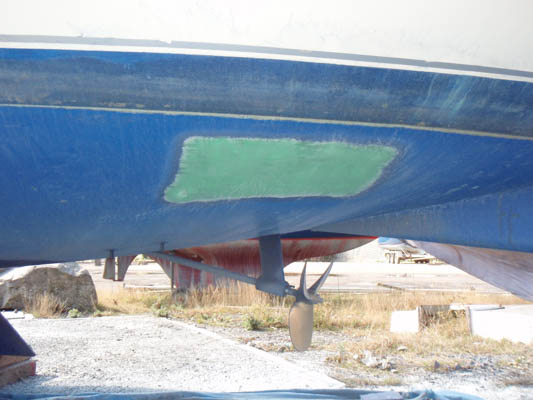
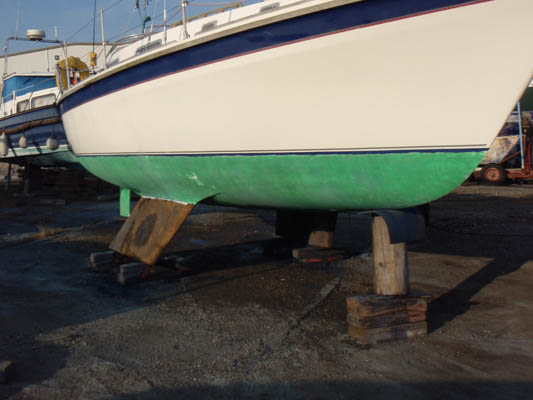
And without a Gelcoat or Gelshield?
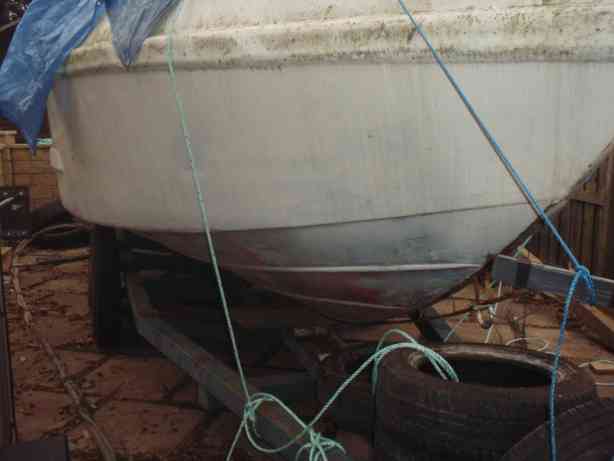
Not much sign of a gel coat around the waterline! - it is possible to do... but the first action afterwards needs to be an application of gelshield or an epoxy seal.
Key Benefits
- The machine offers Pressure Adjustment which means that the system is gentle enough to clean delicate surfaces, yet high pressures make it powerful enough to strip multiple layers of paint in one sweep.
- It is not a chemical process so no noxious or harmful slurries or fumes are generated.
- As the sand jet uses only minimal amounts of water and abrasive the system will cause minimal mess around a marina yard; Considerably less mess than other sandblasters.
- Can strip paint down to, and stop at, a gel-coat layer.
- Fine on hardwood, but will raise grain on softwood